
DRAINAGE AND BASE PREPARATION
Professional drainage and base preparation in Plano, TX
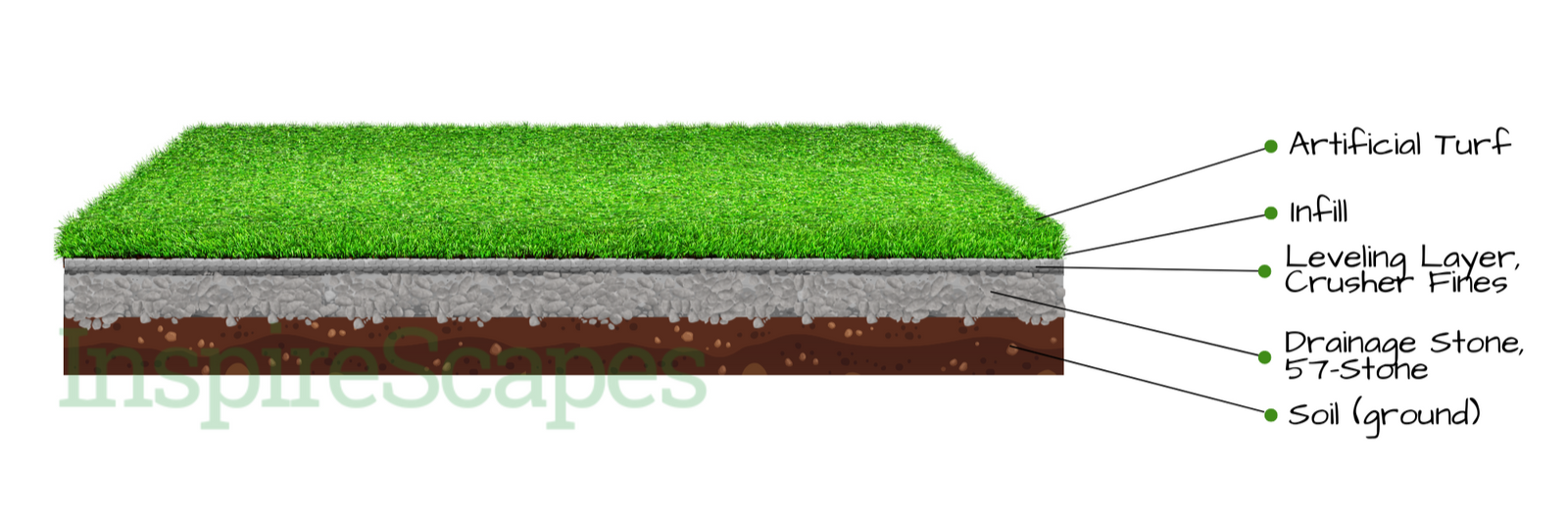
Proper base preparation is critical for a successful turf installation. Our drainage and base preparation services ensure your artificial grass has the solid foundation it needs for optimal performance and longevity.
FEATURES
- -Site grading and leveling
- -Aggregate base installation
- -Drainage system design
- -Soil compaction and stabilization
- -Weed barrier installation
BENEFITS
- -Prevents pooling and puddles
- -Ensures even, smooth surface
- -Extends turf lifespan
- -Handles heavy rain events
- -Professional quality foundation
Drainage and Base Preparation in Plano, TX The foundation beneath your synthetic grass determines its performance, longevity, and appearance. Professional drainage and base preparation creates the essential infrastructure that supports beautiful, functional turf installations throughout North Texas's challenging climate and soil conditions. ## Importance of Proper Base Construction Base construction is the most critical yet often overlooked aspect of synthetic turf installation. A properly prepared base provides: ### Structural Support **Load Distribution**: Even weight distribution prevents sinking, rutting, and surface irregularities. **Traffic Tolerance**: Robust bases withstand foot traffic, equipment, and environmental stresses. **Dimensional Stability**: Proper compaction prevents settling and maintains designed grades. **Longevity Foundation**: Quality base construction extends entire system lifespan. ### Drainage Function **Water Movement**: Bases channel water away from surfaces and toward discharge points. **Permeability**: Proper materials and compaction allow water percolation without erosion. **Saturation Prevention**: Effective drainage prevents waterlogging that affects performance. **Frost Protection**: Appropriate construction minimizes freeze-thaw damage potential. ### Performance Foundation **Surface Consistency**: Uniform bases create smooth, predictable turf surfaces. **Fiber Support**: Stable bases allow fibers to stand upright and perform as designed. **Infill Stability**: Proper bases prevent infill migration and maintain distribution. **Appearance Maintenance**: Well-constructed bases preserve aesthetic quality over time. ## Soil Assessment and Preparation Understanding and preparing native soils is essential for base performance. ### Site Evaluation **Soil Classification**: Identifying soil types—clay, sand, loam—and their characteristics. **Percolation Testing**: Measuring water movement rates through native soils. **Compaction Analysis**: Assessing existing soil density and load-bearing capacity. **Organic Content**: Evaluating organic matter that could cause settling or drainage issues. ### Problem Soil Management **Clay Soils**: Plano's prevalent clay soils require special attention to drainage and expansion/contraction cycles. **Expansive Soils**: Treatment of soils with high shrink-swell potential that affect base stability. **High Water Tables**: Addressing subsurface water conditions that could affect installations. **Contaminated Soils**: Managing soils with chemical or physical contamination. ### Preparation Procedures **Excavation**: Removing unsuitable materials to required depths. **Scarification**: Loosening native soil to improve bonding with base materials. **Moisture Conditioning**: Adjusting soil moisture for optimal compaction. **Proof Rolling**: Verifying subgrade stability before base placement. ## Aggregate Base Materials Class II road base is the industry standard for synthetic turf foundations. ### Material Specifications **Gradation Requirements**: Specific particle size distributions ensure optimal compaction and drainage. **Crushed Aggregate**: Angular stone particles interlock for maximum stability. **Fines Content**: Appropriate fine material fills voids and enhances compaction. **Source Quality**: Quality-controlled sources ensure consistent material properties. ### Material Selection **Standard Class II**: General purpose base material for typical installations. **Permeable Variations**: Enhanced drainage characteristics for problem areas. **Stabilized Options**: Cement or asphalt-stabilized bases for extreme conditions. **Recycled Materials**: Crushed concrete or asphalt as sustainable alternatives. ### Depth Requirements **Residential Applications**: Typically 3-4 inches of compacted base material. **Commercial Projects**: 4-6 inches for higher traffic and performance requirements. **Sports Fields**: 6-8+ inches for intensive athletic use and safety requirements. **Specialty Applications**: Custom depths based on specific load and drainage needs. ## Compaction Requirements and Testing Proper compaction ensures base stability and longevity. ### Compaction Standards **Percent Density**: Typically 90-95% of standard Proctor maximum density. **Lift Thickness**: Maximum 6-8 inch loose lifts for effective compaction. **Moisture Control**: Optimum moisture content for specified density achievement. **Uniformity**: Consistent compaction across entire installation area. ### Testing Methods **Nuclear Density Testing**: On-site verification of achieved density. **Sand Cone Testing**: Alternative density verification method. **Proof Rolling**: Visual and physical verification of surface stability. **Documentation**: Testing records for quality assurance and coverage details support. ### Equipment Requirements **Vibratory Rollers**: Provide dynamic compaction for maximum density. **Plate Compactors**: For detailed work and smaller areas. **Tamping Equipment**: For edges and areas inaccessible to rollers. **Quality Equipment**: Well-maintained equipment ensures consistent results. ## Grading for Water Runoff Proper grades ensure water moves appropriately across and away from installations. ### Grade Design **Slope Requirements**: Minimum 1-2% grade for effective surface drainage. **Directional Control**: Grading channels water away from structures and toward discharge points. **Cross-Slope Management**: Preventing water accumulation in low spots. **Sheet Flow**: Promoting even water movement across surfaces. ### Elevation Control **Laser Grading**: Precision equipment achieves exact grade specifications. **Benchmark Establishment**: Reference points ensure consistent elevations. **Transition Management**: Smooth grade changes prevent abrupt transitions. **Finish Tolerance**: Final grades within specified tolerances for turf installation. ## French Drain and Channel Drain Installation Supplemental drainage systems address challenging site conditions. ### French Drain Systems **Perforated Pipe**: Collection pipes that gather subsurface water. **Aggregate Surround**: Coarse material that filters water to pipes. **Geotextile Fabric**: Prevents soil intrusion while allowing water flow. **Discharge Points**: Appropriate outlets that don't create erosion or other problems. ### Channel Drain Applications **Surface Collection**: Linear drains that gather surface runoff. **High-Traffic Areas**: Durable solutions for areas with concentrated flow. **Hardscape Integration**: Coordinated design with adjacent hardscape drainage. **Maintenance Access**: Designs that facilitate cleaning and maintenance. ### Design Considerations **Capacity Calculations**: Sizing systems for expected water volumes. **Placement Strategy**: Strategic positioning for maximum effectiveness. **Connection Points**: Integration with existing drainage infrastructure. **Code Compliance**: Meeting local drainage and runoff regulations. ## Perforated Pipe Systems Subsurface pipe drainage provides comprehensive water management. ### System Components **Perforated Pipe**: Slotted or holed pipes that collect groundwater. **Collector Lines**: Main lines that gather flow from lateral pipes. **Outlet Structures**: Points where collected water discharges appropriately. **Cleanouts**: Access points for system maintenance and inspection. ### Installation Standards **Grade Requirements**: Minimum slopes that ensure positive flow. **Depth Considerations**: Appropriate burial depths for protection and function. **Material Specifications**: Quality pipe materials for long-term performance. **Connection Methods**: Proper joints and connections that prevent failures. ### Integration with Turf Systems **Base Coordination**: Pipe systems positioned within or below base layers. **Discharge Management**: Ensuring collected water moves away from installation. **Access Maintenance**: Designs that allow system inspection and cleaning. **Performance Verification**: Testing to confirm system function before turf installation. ## Texas Clay Soil Challenges Plano's clay-heavy soils present specific challenges requiring specialized approaches. ### Clay Characteristics **Low Permeability**: Slow water movement through clay soils affects drainage. **Volume Change**: Clay expansion and contraction with moisture changes. **Compaction Sensitivity**: Clay can become too dense, preventing drainage. **Cracking Patterns**: Dry clay develops cracks that affect surface stability. ### Management Strategies **Enhanced Drainage**: More robust drainage systems compensate for native soil limitations. **Separation Layers**: Geotextiles that prevent clay migration into base materials. **Stabilization Treatments**: Lime or cement treatments that improve clay characteristics. **Depth Considerations**: Deeper excavation and base construction in clay areas. ### Seasonal Considerations **Wet Season Preparation**: Ensuring systems handle spring rainfall patterns. **Drought Response**: Managing clay shrinkage during dry periods. **Expansion Cycles**: Designing for soil volume changes throughout seasons. **Maintenance Adjustments**: Seasonal maintenance that addresses clay-related issues. ## Preventing Pooling and Flooding Effective drainage design prevents water accumulation problems. ### Problem Prevention **Grade Verification**: Ensuring positive drainage across entire installation. **Low Spot Elimination**: Designing grades that prevent water collection. **Capacity Planning**: Systems sized for extreme rainfall events. **Discharge Assurance**: Confirming water moves completely away from areas. ### Issue Resolution **Wet Spot Investigation**: Identifying causes of persistent moisture problems. **Drainage Enhancement**: Adding capacity where existing systems prove inadequate. **Surface Correction**: Adjusting grades to eliminate collection points. **System Modification**: Improving or replacing underperforming drainage components. ## Getting Started with Drainage and Base Proper drainage and base preparation requires professional expertise and equipment. Our drainage specialists evaluate your site's soil conditions, drainage patterns, and performance requirements to design and construct base systems that ensure optimal turf performance. From residential lawns to commercial sports fields, we provide the foundation that makes beautiful, lasting synthetic grass possible. Contact us today to schedule your site evaluation and discover how professional drainage and base preparation can protect your turf investment.
FREQUENTLY ASKED QUESTIONS
Why is base preparation so important for synthetic grass?
The base is literally the foundation of your synthetic grass system. It provides structural support that prevents sinking and rutting, creates proper drainage that prevents pooling and extends turf life, ensures dimensional stability that maintains appearance, and supports the entire system for 15-20 years. Skimping on base preparation leads to expensive problems that can require complete reinstallation.
How deep should the base be for synthetic turf?
Base depth depends on the application. Residential lawns typically require 3-4 inches of compacted base material. Commercial installations need 4-6 inches. Sports fields and high-traffic areas may require 6-8+ inches. The specific depth is determined by soil conditions, expected traffic, drainage requirements, and product specifications during the design phase.
How do you handle Plano's clay soil for turf installation?
Clay soils require special attention including enhanced drainage systems, separation geotextiles to prevent clay migration into base materials, potentially deeper excavation and base construction, and sometimes soil stabilization treatments. We thoroughly assess soil conditions and design appropriate solutions that address clay's low permeability and volume change characteristics.
What type of base material do you use?
We typically use Class II road base—a crushed aggregate material with specific gradation that compacts well and provides both stability and drainage. The angular stone particles interlock for maximum stability while the fines content allows proper compaction. For special conditions, we may use permeable variations, stabilized bases, or other engineered materials based on site requirements.
Will my synthetic grass installation handle heavy rain?
Yes, properly designed and installed synthetic grass systems handle heavy rain effectively. Quality turf backing drains at 30+ inches per hour, while properly prepared bases channel water away from the installation. We design drainage systems that accommodate Texas downpours, including supplemental drainage features like French drains when needed for challenging site conditions.
READY TO GET STARTED?
Contact us today for a free consultation and estimate for your drainage and base preparation project.
GET A FREE ESTIMATE